
Custom Dental Bridges in Brickell for a Complete, Natural Smile
At HQ Dontics, we offer custom dental bridges to restore missing teeth and enhance the beauty of your smile. Dental bridges are a reliable solution to fill the gaps caused by one or more missing teeth, helping you regain both function and aesthetics. Our team of skilled dental professionals is dedicated to crafting high-quality dental bridges that seamlessly blend with your natural teeth.
With a focus on precision and personalized care, we ensure that your dental bridge provides long-lasting durability and comfort, allowing you to speak, chew, and smile with confidence.
When one single tooth is lost, it is expected that five or more other teeth may shift or move. For this reason, it is important to replace a missing tooth as soon as possible. Dental bridges may be the solution. Leaving the space may also cause other problems, teeth may drift into the space changing your bite, and this may result in a sore jaw, gum disease, or tooth decay due to difficulty cleaning the teeth.

What are dental bridges?
Dental bridges are false teeth that are supported by neighboring teeth in order to replace one or more missing teeth.
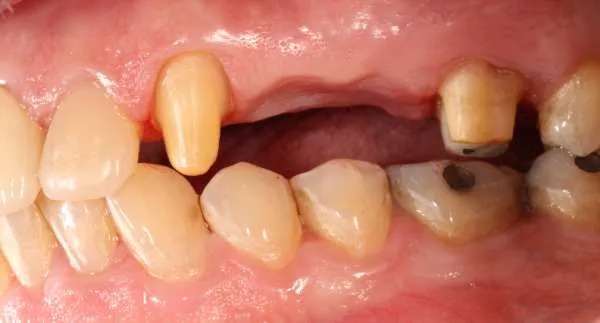
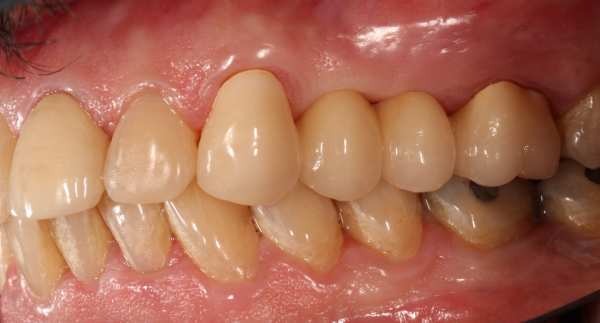
They can be attached either permanently, so that they are called fixed dental bridges, or that they are removable, as in a denture. We fuse the false tooth in between two cosmetic porcelain crowns which serve as anchors bridging them together. Fixed dental bridges can replace several teeth or just one tooth.
Dental bridges can be an excellent solution because they look and feel like natural teeth. Dental bridges are used to aesthetically eliminate the gap left by a missing tooth, giving you comfortable wear and a beautiful smile.
They improve chewing and speaking, ease the stress on the bite, and cosmetic dental bridges can also help support your facial bone structure.
What is the difference between a bridge and a denture?
The biggest difference between a bridge and a denture is that a bridge is permanently fixed, so you cannot remove it. The denture is removable.
What are the different types of dental bridges?
Dentistry offers several types of dental bridges, which can be made of durable porcelain, gold, or composite materials. There are three main types of dental bridges:
- Traditional fixed bridges: this is the most commonly used type of bridge and consists of two cosmetic porcelain crowns that are anchoring the porcelain teeth or implants.
- Resin-bonded bridges: this is an option when the gap to be filled is in between the front teeth and when the adjacent teeth on either side of the missing tooth do not have large fillings. The false tooth has two metal bands that are bonded to the adjacent teeth.
- Cantilever bridges: these are mostly used for the front teeth as they are susceptible to lower stress. Cantilever bridges are used when the teeth present only one side of the space, as anchorage.
What is the procedure for the placement of dental bridges?
Dental bridges, regardless of type, will generally require two visits. In your first appointment, we will prepare the teeth surrounding the gap, then take a mold and place a temporary cosmetic bridge. The mold is used as a guide for the crafting of your cosmetic dental bridge.
On your next appointment, we will bond your dental bridge into place.
When are dental bridges needed?
Bridges are recommended when there are one or more teeth missing that affect your:
- Smile and appearance.
- Bite, as a result of adjacent teeth leaning into the space and altering the way the upper and lower teeth bite together.
- Speech.
- The shape of your face.
- Gum disease and tooth decay, as a result of food accumulated in the gap.
What are the pros and cons of dental bridges?
One of the biggest pros is time—it's quick to fabricate. One of the biggest cons for a bridge is the preparation of the adjacent teeth. The teeth adjacent to the missing space may need to be cut down a little bit to accommodate the bridge, resulting in a loss of tooth structure.
How can a dental bridge splint teeth together?
A dental bridge can sometimes be used to splint teeth together. This means that we solidify the bridge and the teeth underneath it by connecting them, making them function as one unit. Depending on the size of the bridge, we can sometimes prolong the life of a tooth under the bridge by having it connected to the surrounding teeth.
Is dental bridge work painful?
Dental bridge work should not be painful. Everything is done under local anesthetic, so nothing should be painful.
How to take care of your cosmetic dental bridges?
Practice good dental hygiene:
- Clean the dental bridge every day and prevent tooth decay, bad breath, and gum disease.
- Clean under the false tooth every day.
- Keep the remaining teeth healthy as these serve as the foundation for the dental bridge.
How long does a dental bridge last?
A dental bridge can last from 10 to 15 years, which is the usual time frame we give.
How should I care for my dental bridge?
You should care for your dental bridge by flossing under it. There are special tools and floss designed for this purpose. Keeping the bridge clean is important. Remember, your teeth under the bridge can still get decay and periodontal disease. Visiting your dentist every four to six months is usually the best way to ensure your bridge lasts.
If you’re looking for dental care you can trust, call us at (229) 508-0551 or email [email protected]. We’re here to help you have the smile you've always wanted!